
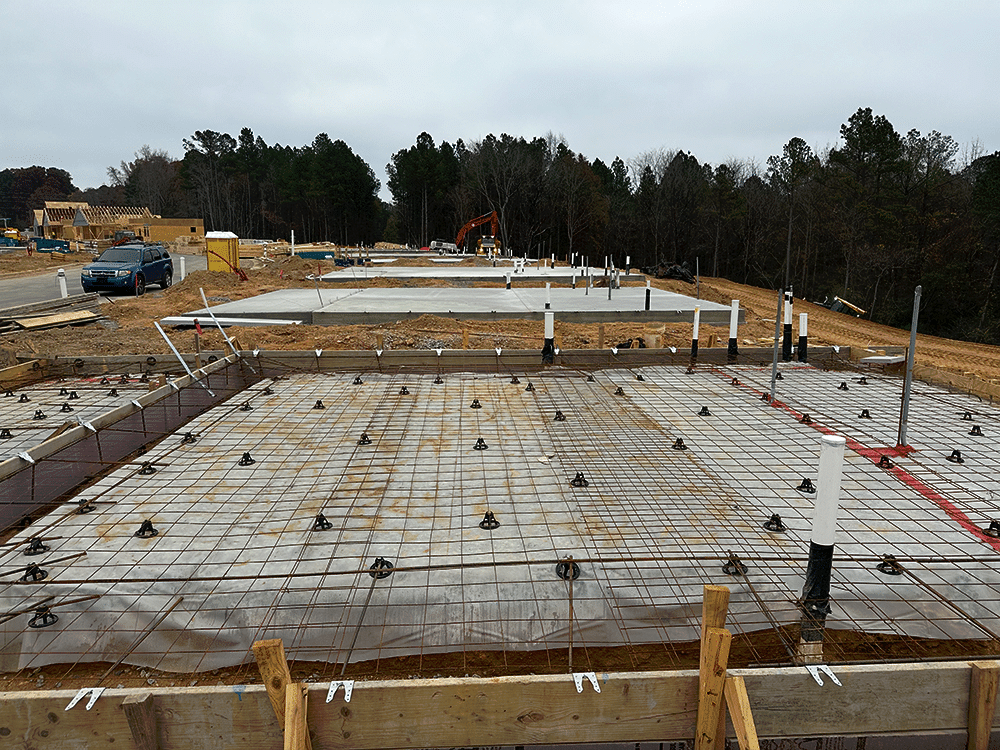
Building a custom home in North Raleigh’s upscale communities like Wakefield Plantation, North Hills, or Bedford demands attention to countless details. Among these, preconstruction termite treatment services stand as one of the most time-sensitive requirements. Understanding when and how to coordinate termite treatments with your construction schedule protects both your timeline and your investment.
What Makes Preconstruction Termite Treatment Different from Post-Build Protection?
Preconstruction termite treatment creates a chemical barrier in the soil before your foundation gets poured. This proactive approach differs completely from treating an existing structure. The treatment happens during construction phases when the ground remains accessible, allowing technicians to apply termiticide directly to the soil that will sit beneath and around your foundation.
North Carolina building codes require this treatment for new residential construction, and the timing proves just as critical as the treatment itself. Once concrete gets poured or framing begins, you lose the opportunity to treat the soil properly. This makes coordination between builders and pest control professionals non-negotiable.
The most successful custom home projects we see involve builders who contact us during the planning phase, not when they’re ready to pour concrete. Early coordination prevents delays and allows us to schedule treatments that align perfectly with construction milestones.
The treatment creates a protective zone that termites cannot cross without encountering the termiticide. Unlike post-construction treatments that work from the outside in, preconstruction applications cover the entire footprint of your home. This comprehensive coverage offers superior protection for structures in areas near Falls Lake and other wooded North Raleigh locations where termite pressure runs high.
Key differences between preconstruction and post-construction treatments:
- Application timing: Preconstruction treatment occurs before the slab gets poured, while post-construction methods treat around finished foundations
- Coverage area: Preconstruction methods cover 100% of the soil beneath your home, post-construction treatments can only address perimeter areas
- Treatment depth: Soil treatments during construction reach deeper layers that become inaccessible once building starts
- Long-term effectiveness: Properly applied preconstruction barriers typically last longer because they protect from ground level up
- Cost efficiency: Treating during construction costs less than retrofitting protection later
When Should Builders Schedule the Initial Termite Treatment Application?
The first termite treatment application happens after rough grading but before any concrete work begins. For most North Raleigh custom builds, this occurs 24 to 48 hours before the foundation pour. Scheduling this treatment requires careful coordination because weather, soil moisture, and construction readiness all factor into timing.
Your pest control team needs access to the entire building footprint with no obstacles, equipment, or materials blocking the treatment area. The soil should be at final grade, meaning all grading and excavation work is complete. If rain falls within 24 hours before or after treatment, the application may need rescheduling to prevent the termiticide from washing away or diluting.
Critical scheduling requirements for initial treatment:
| Construction Phase | Timing Window | Site Requirements |
|---|---|---|
| After rough grading | Complete 24-48 hours before concrete | Final grade achieved, no equipment on site |
| Before foundation pour | Allow 24 hours for treatment to settle | Clear access to entire footprint |
| Weather dependent | No rain forecast for 24 hours post-treatment | Soil moisture levels appropriate |
| Inspection coordination | Treatment certificate ready for building inspector | Documentation completed before pour |
For luxury custom homes in Bedford or near Falls Lake, builders often work with tighter schedules because of the complexity of the builds. This makes communication between the general contractor, foundation crew, and pest control company critical. A missed treatment window can delay your entire project by several days or even weeks, depending on weather and technician availability.
How Do Construction Milestones Dictate Treatment Phases?
Termite treatment for new construction happens in distinct phases that align with specific building milestones. Each phase requires the construction site to meet certain conditions before technicians can perform their work. Missing a phase or scheduling treatments in the wrong order compromises the protective barrier you’re trying to create.
The first phase treats the soil in the footprint area where your slab will be poured. This creates the base layer of protection. The second phase happens after the foundation is set but before backfilling occurs. This treats the soil around the foundation perimeter. If your home includes a basement or crawl space, additional treatment phases become necessary.
We’ve worked with hundreds of custom builders across North Raleigh, and the ones who maintain the smoothest schedules understand that termite treatments aren’t flexible appointments. These treatments need specific site conditions, and trying to rush or skip phases creates gaps in protection that termites will eventually find.
Treatment phases matched to construction milestones:
- Pre-pour treatment: Applied to soil at final grade across the entire slab footprint, creating the foundation barrier
- Post-pour perimeter treatment: Treats soil around foundation walls after concrete sets but before backfill, sealing exterior gaps
- Penetration treatments: Applied around plumbing and utility penetrations that pierce the slab, closing entry points
- Crawl space applications: For homes with crawl spaces, treats both soil and foundation walls before closing access
- Garage and porch treatments: Separate applications for attached structures with their own slab requirements
Custom homes in Wakefield Plantation and North Hills often feature complex floor plans with multiple levels, attached garages, and covered outdoor living spaces. Each of these elements requires coordinated treatment timing. Your builder should provide your pest control company with detailed plans showing all slabs, footings, and foundation elements at least two weeks before the first scheduled treatment.
What Weather Conditions Affect Treatment Scheduling?
Weather plays a bigger role in termite treatment timing than most builders initially realize. Rain can wash away termiticide before it bonds with the soil, and frozen ground prevents proper chemical distribution. North Raleigh’s climate means builders face weather-related delays most commonly during winter months and spring storm seasons.
Temperature affects how termiticide binds to soil particles. Most products require ground temperatures above 40°F for proper application. During colder months, even if air temperature feels mild, soil temperature can remain too cold for treatment. This becomes particularly relevant for builds that extend into November through February.
Weather factors that influence treatment timing:
| Weather Condition | Impact on Treatment | Required Delay |
|---|---|---|
| Rain within 24 hours before | Soil too saturated for chemical bonding | Wait until soil drains, typically 24-48 hours |
| Rain forecast 24 hours after | Risk of washing away termiticide | Reschedule to clear weather window |
| Ground temperature below 40°F | Chemical cannot distribute properly in soil | Wait for warmer ground conditions |
| High winds above 15 mph | Spray drift can affect application accuracy | Postpone until wind speeds decrease |
| Extreme heat above 95°F | Rapid evaporation reduces effectiveness | Schedule for morning hours when cooler |
For high-end builds near Falls Lake, builders often need backup treatment dates built into their schedules. The wooded locations that make these properties desirable also expose them to more unpredictable weather patterns. Smart builders schedule termite treatments with 48-hour buffer zones on either side to account for weather delays without affecting the critical path of construction.
How Long Does Each Treatment Phase Take to Complete?
Treatment duration depends on the size and complexity of your custom home. A straightforward 2,500 square foot single-story home might require two to three hours for the initial soil treatment. Larger homes with 4,000+ square feet, basements, or complex foundations can take six to eight hours or require multiple site visits to complete all treatment phases.
The application process involves more than just spraying chemicals. Technicians need time to measure and mark the treatment area, calculate product quantities, mix solutions, and document their work for building inspectors. After application, the treatment needs time to bond with the soil before construction activities can resume.
Builders sometimes ask if we can speed up treatments to keep construction moving. The answer is no. Rushing termite treatments creates gaps in coverage and can void warranties. Each phase requires proper preparation time, application time, and settling time to work correctly.
Time requirements for different treatment phases:
- Site preparation and marking: 30-45 minutes for layout and measurement verification before chemical application begins
- Pre-pour slab treatment: 2-4 hours depending on square footage, includes mixing, application, and documentation
- Perimeter treatment after pour: 1-3 hours for trenching and treating around foundation walls
- Penetration point treatments: 30-60 minutes per major utility penetration, completed as plumbing gets installed
- Final inspection and certification: 30 minutes for paperwork completion and treatment verification
Custom builders working on luxury properties in Bedford or Wakefield Plantation should allocate full construction days for termite treatments rather than trying to squeeze them into partial days. This approach prevents scheduling conflicts when treatments run longer than expected or when site conditions require additional preparation.
What Documentation Do Inspectors Need Before Approving Construction?
Building inspectors in Wake County require specific termite treatment documentation before they’ll approve foundation and framing inspections. This paperwork proves that treatments were applied according to state regulations and industry standards. Missing or incomplete documentation can halt construction until proper certification gets provided.
Your pest control company must provide a detailed treatment record that includes the chemical product used, concentration rates, application quantities, and specific areas treated. This documentation needs signatures from licensed applicators and often requires accompanying diagrams showing treatment zones. The paperwork becomes part of your home’s permanent record and transfers to future owners.
Required documentation components:
| Document Type | Information Included | When Required |
|---|---|---|
| Pre-treatment notice | Site address, treatment date, chemical products planned | Filed 24-48 hours before application |
| Application record | Product names, concentrations, gallons applied, technician license number | Completed day of treatment |
| Site diagram | Treatment areas marked, measurements noted, penetration points identified | Attached to application record |
| Certification letter | Statement of compliance with NC regulations, warranty information | Before foundation inspection |
| Product labels and SDS | Chemical safety data, EPA registration numbers | Available for inspector review |
For custom homes in North Raleigh’s premium communities, builders should request digital copies of all termite treatment documentation. This makes it easier to provide records to inspectors quickly and gives homeowners permanent access to their treatment history. Some pest control companies now offer online portals where builders and homeowners can access these documents anytime.
How Do Soil Conditions in North Raleigh Affect Treatment Timing?
North Raleigh’s soil composition varies considerably across different neighborhoods, and these variations affect termite treatment timing and effectiveness. Clay-heavy soils near Falls Lake drain slowly and may need longer drying periods after rain before treatment can occur. Sandy soils in other areas drain quickly but may require adjusted chemical concentrations to maintain proper protection.
Soil compaction also influences treatment scheduling. Over-compacted soil prevents termiticide from penetrating to the proper depth. Under-compacted soil might shift after treatment, creating gaps in the protective barrier. Your pest control technician should evaluate soil conditions during the site visit and may recommend adjusting compaction before treatment proceeds.
Soil characteristics that impact treatment approach:
- Clay content: High clay soil retains moisture longer, requiring extended drying periods but holds termiticide well once applied
- Sand composition: Sandy soil drains fast but needs proper chemical concentration to prevent leaching below protective depth
- Organic matter: Soil with high organic content needs increased product volume because material absorbs some termiticide
- Compaction levels: Properly compacted soil accepts termiticide better and maintains stable protective zones
- Moisture retention: Soil that stays wet longer needs careful weather monitoring before and after treatment
Custom builders working in Wakefield Plantation often encounter mixed soil conditions within the same property because of the area’s natural topography. This might mean treating different zones of the foundation on different days to account for varying soil moisture levels. Experienced pest control companies test soil conditions before committing to treatment dates.
What Coordination Steps Prevent Treatment Delays?
Preventing delays requires active communication between builders, pest control companies, and concrete contractors. The most successful projects establish a treatment timeline during the planning phase and build flexibility into the schedule for weather contingencies. This proactive approach beats reactive scheduling where everyone scrambles when treatment dates arrive.
Builders should provide pest control companies with advance notice of at least one week before treatments are needed. This allows companies to schedule crews, order materials, and coordinate with other trades working on site. Last-minute scheduling often results in delays because technicians and materials might not be available on short notice.
The smoothest projects we handle are those where the builder sets up a group text or email chain that includes all the key players. When grading finishes or weather changes, everyone knows immediately and can adjust plans together. This collaborative approach cuts delay time dramatically.
Coordination checklist for builders:
- Initial contact: Reach out to termite control companies during design phase to understand requirements and timing needs
- Site plan sharing: Provide detailed foundation plans showing all slabs, footings, and utility penetrations at least two weeks early
- Schedule integration: Add treatment windows to master construction schedule with buffer days for weather delays
- Weather monitoring: Establish who monitors forecasts and communicates changes to all parties
- Site access preparation: Confirm equipment will be moved and areas cleared 24 hours before treatment
- Concrete scheduling: Coordinate pour dates with treatment completion, allowing proper settling time
- Inspection planning: Schedule building inspections only after receiving treatment certification documents
For luxury custom homes in North Hills or Bedford, where construction timelines already face complexity from architectural details and custom features, termite treatment coordination becomes even more critical. These projects benefit from assigning one person, typically the project manager or superintendent, to own all pest control coordination and communication.
How Do Different Foundation Types Change Treatment Requirements?
Foundation type directly affects termite treatment complexity and timing. Slab-on-grade foundations require different treatment protocols than homes with basements or crawl spaces. Each foundation style presents unique challenges for creating a complete protective barrier against termites.
Slab foundations get treated before concrete pours, with the entire footprint receiving chemical application. Basement foundations need treatment in phases: first the floor area, then the perimeter after walls go up, and finally any areas where the slab meets walls. Crawl space foundations require both soil treatment and foundation wall treatment to protect all vulnerable entry points.
Treatment approaches by foundation type:
| Foundation Type | Treatment Phases | Timing Considerations |
|---|---|---|
| Slab-on-grade | Single pre-pour treatment plus perimeter after backfill | Simplest scheduling, typically one day for treatment |
| Full basement | Floor treatment, wall treatment, perimeter treatment | Multiple phases require coordination with concrete schedule |
| Crawl space | Soil treatment, pier treatment, wall treatment | More complex access requirements, additional time needed |
| Combination foundation | Separate treatments for each section type | Most complex, requires detailed planning |
Many custom homes near Falls Lake incorporate multiple foundation types in one structure. You might have a basement under the main house, a crawl space under an addition, and slab-on-grade for the garage. Each section needs appropriate treatment at the right construction phase. This complexity makes detailed planning and precise coordination necessary to avoid gaps in protection.
What Role Does the Building Timeline Play in Treatment Effectiveness?
Your overall construction timeline influences termite treatment effectiveness in ways that might not seem obvious initially. Treatments applied during optimal weather conditions and allowed proper curing time before construction proceeds work better than rushed applications. A compressed schedule that forces treatments during marginal conditions can compromise long-term protection.
The time between treatment and when the home gets closed in matters too. Extended exposure to weather after treatment can reduce effectiveness. Ideally, foundation work, framing, and roof installation should progress steadily after termite treatment to minimize how long the treated soil sits exposed to rain and temperature extremes.
Timeline factors affecting treatment quality:
- Construction season: Spring and fall offer most stable weather for treatments, winter and summer present more challenges
- Project duration: Longer builds expose treated soil to more weather events that can affect protection levels
- Sequential trades: Tight coordination between concrete, framing, and pest control prevents delays and rework
- Interruption periods: Gaps in construction from weather or material delays can affect when treatments should occur
- Final completion: Time from treatment to move-in affects warranty coverage and protection verification
Custom builders in Wakefield Plantation working on high-end properties often choose to start construction in early spring or early fall. These seasons provide the most favorable conditions for termite treatments and allow projects to progress through critical phases before extreme summer heat or winter cold arrives. Strategic timing of project starts can reduce weather-related delays throughout the build.
How Can Builders Maintain Quality Control During Treatment Application?
Quality control for termite treatments starts with hiring licensed, experienced pest control companies that specialize in new construction work. Not all pest control providers have the expertise or equipment for preconstruction treatments. Builders should verify licenses, insurance coverage, and request references from other custom home projects before selecting a provider.
During application, builders or their representatives should be present to observe the work. This isn’t about micromanaging the pest control technicians but about understanding what’s being done and verifying that treatment matches the documented plan. Photos and video of the application process create records that can be valuable if questions arise later.
Quality assurance steps builders should take:
- Contractor verification: Confirm pest control company holds proper licenses and carries adequate insurance for commercial pest control work
- Product confirmation: Verify chemical products match those specified in treatment plan and approved for residential use
- Application observation: Have superintendent or trusted representative present during treatment to document process
- Coverage verification: Check that all areas specified in treatment plan receive proper application
- Documentation review: Examine completed paperwork for accuracy before submitting to building inspectors
- Warranty understanding: Review warranty terms and know what actions might void coverage
For luxury builds in Bedford or near Falls Lake, some builders now include third-party inspections of termite treatments as part of their quality control process. These independent reviews verify that treatments meet or exceed minimum standards and provide homeowners with additional confidence in their investment protection.
What Happens When Treatment Schedules Conflict with Construction Delays?
Construction delays happen even on well-managed projects. Weather, material shortages, trade scheduling conflicts, and other factors can push timelines back. When delays occur after termite treatment has been scheduled but before it’s applied, rescheduling typically poses few problems. The real challenge comes when treatment has already been applied and then construction delays occur.
If concrete doesn’t get poured within the recommended timeframe after soil treatment, the effectiveness of the termiticide can diminish. Extended exposure to weather, especially heavy rain, can wash away or dilute the chemical barrier. In these cases, reapplication might become necessary, adding cost and further delaying the project.
Managing treatment when delays occur:
| Delay Timing | Impact on Treatment | Recommended Action |
|---|---|---|
| Before initial treatment | Minimal impact, just reschedule | Maintain communication with pest control company about new dates |
| Between treatment and pour (under 7 days) | Usually acceptable with weather monitoring | Verify no heavy rain occurred, document conditions |
| Between treatment and pour (over 7 days) | Effectiveness may be compromised | Have pest control company assess and potentially retreat |
| During multi-phase treatment | Timing between phases matters | Adjust subsequent phase timing based on actual progress |
North Raleigh builders working on custom homes should build contingency time into their termite treatment schedules. Planning for a five-day window between treatment and concrete pour, when only three days are truly necessary, provides buffer room for minor delays without requiring retreatment. This approach costs nothing extra but can prevent expensive rework.
Frequently Asked Questions
Can termite treatments be applied during winter months in North Raleigh?
Yes, treatments can occur during winter if soil and air temperatures stay above 40°F. Winter applications require careful weather monitoring because cold snaps can arrive suddenly in North Raleigh. Many builders prefer scheduling treatments from March through November to avoid temperature-related complications that might require rescheduling.
Do all custom home builds require the same treatment concentration?
No, treatment concentration varies based on soil type, lot conditions, and termite pressure in the specific location. Wooded lots near Falls Lake might need stronger concentrations than cleared lots in suburban areas. Licensed pest control technicians evaluate each site individually and adjust treatment plans accordingly to meet state regulations and manufacturer guidelines.
How long after treatment can concrete crews begin working?
Most termiticides require 24 hours to bond properly with soil before concrete work begins. This settling period allows the chemical to distribute through the soil and reach effective concentration levels. Starting concrete work too soon can disturb the treatment barrier and reduce protection. Verify timing requirements with your pest control company based on the specific products used.
What happens if builders discover additional plumbing penetrations after initial treatment?
Additional penetrations require supplemental treatments to maintain barrier integrity. Pest control companies should be notified immediately when changes occur to the foundation plan. Most companies include provisions for minor additions in their initial agreements. Significant changes might require amended contracts and adjusted pricing to cover the extra work needed.
Are termite treatment warranties transferable to new homeowners?
Most preconstruction termite warranties transfer to subsequent owners, though terms vary by pest control company. Warranties typically require annual inspections and proper home maintenance to remain valid. Builders should provide all treatment documentation and warranty information to homeowners at closing so they can maintain coverage and prove treatment history.
Can builders use the same pest control company for construction treatments and post-construction service?
Yes, and this approach often makes sense because the company already knows your home’s treatment history and foundation layout. Many pest control providers offer discounted rates on ongoing service when they perform the preconstruction work. This continuity helps maintain consistent protection and simplifies record-keeping for warranty purposes.
Professional Treatment Coordination Creates Lasting Protection
Coordinating preconstruction termite treatments with your construction schedule requires planning, communication, and flexibility. The most successful custom home projects in North Raleigh’s luxury communities treat termite protection as a critical milestone rather than a checkbox item. When builders understand treatment timing requirements and work proactively with pest control professionals, projects stay on schedule and homes receive the thorough protection they need.
Wake Pest Control specializes in coordinating preconstruction termite treatment services with custom home builders throughout North Raleigh. Our technicians understand construction timelines and know how to work efficiently within your schedule. We provide complete documentation, maintain open communication, and stand behind our work with comprehensive warranties. Contact Wake Pest to discuss termite protection for your next custom home project.