
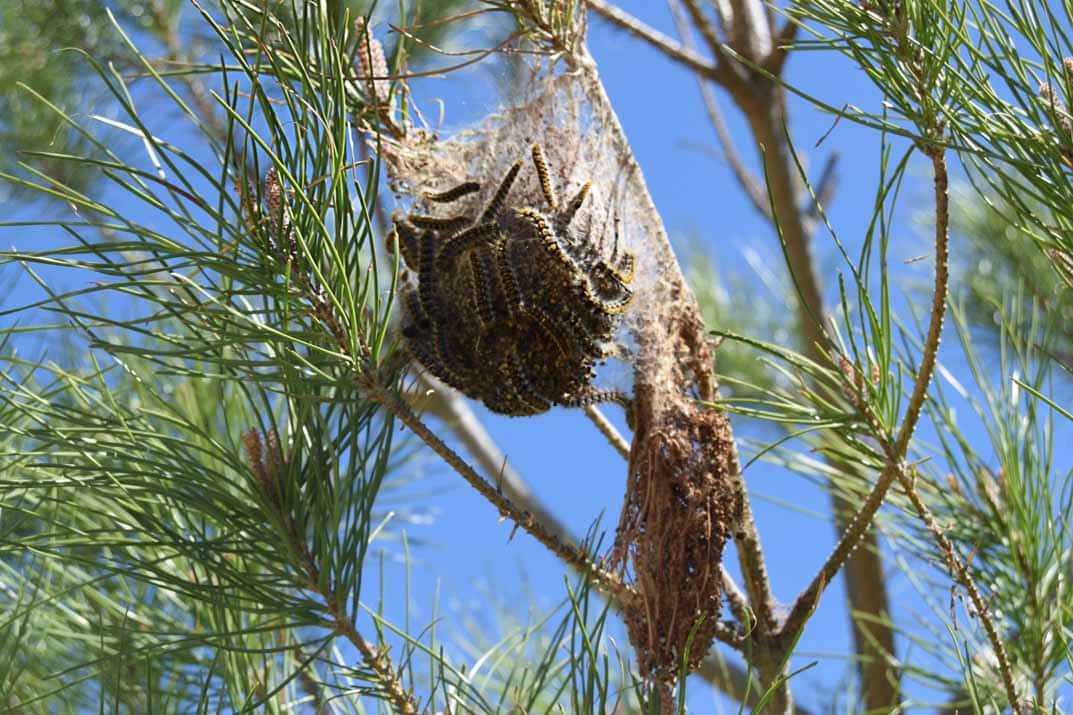
It’s the Wake Pest crew, here to discuss something we get asked about all the time: “My trees were hit hard by tent caterpillars this year. Now what?” Defoliation can be alarming, especially if it’s your first time dealing with an infestation. But don’t worry—many trees can recover with the right care and maintenance. In this article, we’ll explain the steps you should take after a caterpillar outbreak and how to fortify your trees for the future.
Assessing the Damage
The severity of damage depends on a few factors:
- Tree Health: Was your tree in good shape before the infestation? Healthy, well-established trees have better odds of bouncing back.
- Defoliation Level: Did the caterpillars strip half the leaves or nearly all of them? Mild to moderate defoliation is often survivable, but severe cases can weaken the tree significantly.
- Timing: If defoliation happened early in the season, some trees may produce a second flush of leaves. Late-season damage might be less taxing since the tree has already stored some energy.
Take a walk around your yard, note which trees were affected, and how extensively. Keep an eye out for signs of stress, like wilting, early leaf drop, or branch dieback.
Immediate Steps for Recovery
Your first goal is to support the tree’s natural healing process. Here’s what we recommend:
- Water, Water, Water: A defoliated tree loses its primary means of photosynthesis. Consistent deep watering—especially during hot, dry spells—helps it replenish lost energy.
- Mulch Properly: Spread organic mulch around the base, leaving a few inches gap from the trunk. This keeps soil moisture levels stable and adds nutrients over time.
- Prune Dead Branches: If you see limbs that are clearly dead or heavily damaged, prune them out. This encourages the tree to focus resources on healthy growth.
Avoid heavy fertilization right after defoliation. Overfertilizing can force the tree into a growth spurt when it’s already stressed, leading to weak branches.
Monitoring for Secondary Issues
Once a tree is weakened by defoliation, it can become a target for other pests and diseases. Boring insects, fungal infections, and bacterial diseases often take advantage of stressed plants. Keep a close watch for changes in bark appearance, oozing sap, or discolored leaves. If you notice anything unusual, consult an arborist or give us a call at Wake Pest.
An NC State Forestry Extension study found that trees stressed by repeated defoliation are significantly more likely to succumb to secondary invaders. That’s why prompt action after an infestation is so crucial.
Planning for Next Season
Recovery is a journey, and part of that journey is prevention. Here’s how to get ahead of next year’s caterpillar risk:
- Winter Inspection: Look for tent caterpillar egg masses on branches. Scrape them off or prune out the affected twigs.
- Early Spring Monitoring: Keep an eye out for small tents forming in the tree crotches. Act quickly with pruning or biological sprays if you spot them.
- Encourage Natural Predators: Birds and beneficial insects help keep caterpillar numbers in check. Plant native shrubs and limit pesticide use that might harm these allies.
The goal is to catch and control infestations while they’re small, long before they can defoliate large sections of the tree.
Long-Term Tree Health Strategies
You can’t predict every pest outbreak, but a resilient landscape can handle surprises better. Consider adopting these practices:
- Diverse Plantings: Plant a variety of native and non-host species so no single pest can wipe out your entire yard.
- Proper Spacing: Overcrowded trees and shrubs compete for light and nutrients, making them more vulnerable to stress and pests.
- Soil Testing: Conduct a soil test to see if your yard lacks any essential nutrients. Correct imbalances with targeted amendments instead of guesswork.
- Regular Pruning: Removing weak or rubbing branches improves air circulation and light penetration, reducing the likelihood of fungal issues.
When to Call in Reinforcements
Not every post-infestation scenario requires a professional, but there are red flags that signal the need for expert help:
- You notice significant bark splitting or sap leakage.
- The tree has lost more than half its canopy for two consecutive years.
- There’s extensive dieback in the crown, especially in older trees.
- You suspect a secondary pest or disease but can’t identify it.
In these cases, our team at Wake Pest can perform a thorough assessment, recommend targeted treatments, or connect you with certified arborists for specialized care. Sometimes, what appears to be caterpillar damage could also be compounded by other issues that require a different approach.
Staying Positive: Trees Are Resilient
One final note: trees are surprisingly tough. Even if yours looks ragged after a bout with tent caterpillars, it may rebound with proper care. We’ve seen countless cases where homeowners were sure their prized maple or cherry wouldn’t survive, only to have it put out fresh leaves the next spring and continue thriving for years.
Of course, prevention is always preferable to recovery. But if you do find yourself dealing with the aftermath of a caterpillar invasion, remember these steps—water, mulch, prune, monitor—and stay vigilant for any secondary problems. With a little patience and the right care, your trees can bounce back, providing shade and beauty for many seasons to come.